Cheese Storage: A Practical Guide to Properly Store and Serve Cheese
Cheese storage: a clear explanation
In a few words:
- Storing cheese is not just about putting it in the fridge: it depends on the type of paste and the wrapping.
- A well-stored cheese keeps its taste, its texture and its serving quality for longer.
- Storing and serving go together: a cheese eaten too cold or cut too early loses part of its flavour.
- Soft paste, pressed paste, blue, fresh cheese or goat cheese do not require the same keeping time, nor the same serving moment.
- The best move is often to let the cheese come up to room temperature, then serve it at the right moment.
Cheese storage is often approached as a question of duration. A cheese is a living matter. It continues to evolve after purchase, even in the refrigerator. Its paste moves, its rind works, its aromas develop, its moisture changes. Between a soft paste, a Comté aged for many months, a blue-veined paste, a fresh cheese or a goat cheese, the rules cannot be identical.
Storing cheese well therefore means preserving what makes its personality. And serving it well means giving it back the space it needs to express its taste, its texture and its length on the palate. At Maison Mons, cheese receives daily attention. At home, this attention continues differently: the right paper, the right temperature, the right moment to take it out, the right cut on the board.
Cheese storage: understanding what we are trying to preserve
Storing a cheese is not only about preventing it from spoiling. It is about preserving an origin, a ripening, an aromatic expression. A raw-milk cheese does not offer the same density or the same fragility as a more standardised product. A soft bloomy-rind paste like a Camembert or certain soft-paste cheeses requires a different attention from that of a pressed paste like a Comté, a Gruyère, a raclette or a Parmigiano Reggiano.
The first rule is therefore to identify the type of cheese. A soft paste holds more water. It evolves faster and more easily takes on the smells of its environment. A pressed paste, especially if well ripened, better withstands keeping over several weeks. A blue-veined paste keeps its character but requires protection so that it does not mark the other pieces in the fridge. A fresh cheese, for its part, lives over a shorter time.
You therefore have to reason not with a single rule, but with a way of observing. The rind, the smell, the suppleness of the paste, the moisture level, the stage of ripening: all of this informs the best storage condition.
How to recognise a well-ripened cheese
Where to store cheese: refrigerator, cellar or vegetable drawer
In most homes, the best place remains the refrigerator, but not in any way. Cheese likes neither harsh cold, nor air that is too dry, nor contact with very strong-smelling foods. The vegetable drawer of the fridge often offers a more stable environment, with slightly gentler humidity. It is often the ideal zone to store your cheese, especially when it comes to soft pastes, fresh cheeses or a goat cheese.
The ideal storage temperature is between 6 and 8 °C. The cheese must not be placed against the coldest wall. A temperature that is too low hardens the paste, slows the aromas and sometimes alters the texture. Conversely, storage that is too warm accelerates deterioration. In domestic use, what matters most is stability.
The cellar can be suitable in certain cases, provided it offers a cool environment (between 10 and 15 °C), clean, without excessive variation and with a good moisture level. In practice, few home cellars today offer a truly reliable condition. The refrigerator therefore remains the most practical solution, provided a few simple storage rules are respected.
You must also avoid direct contact with certain open vegetables or foods. Cheese quickly absorbs its environment. A soft paste placed next to leftover food or an imprecisely wrapped product can lose its balance within a few days.
At what temperature to serve cheese · How to keep a cheese board in summer
The right wrapping: paper, box, air and moisture
Cheese needs to breathe. It is a simple rule, but often forgotten. Plastic film applied directly to the paste blocks the air, retains too much water, promotes excessive moisture and can alter the taste. It is better to use a special cheese paper (the one from your cheesemonger), or failing that a clean paper, slightly protective but not suffocating. Paper helps preserve the balance between protection and breathing.
The original wrapping can be suitable for a short time, especially if it was designed by a cheesemonger. But it must be watched. A cheese wrapped too long in a closed material loses quality. For some products, a box can be useful, provided it is not completely airtight. The goal is not to isolate completely, but to create a stable environment. A slightly ventilated box, clean and reserved for cheese, often allows better cheese storage than a simple plastic bag.
Vacuum storage deserves a nuance. It can suit certain pressed pastes or transport uses, but it is not the best technique for all cheeses. Under vacuum, the air is blocked, the evolution is modified, and the paste can be compressed. For a hard paste, a Comté, a Gruyère or a Parmigiano Reggiano, it can remain acceptable over a given period. For soft-paste cheeses, blue-veined pastes or fresh cheeses, vacuum wrapping is rarely the ideal solution.
A good tip is to change the paper if moisture builds up, without multiplying unnecessary handling.
How to transport cheese in summer · How to transport cheese on holiday
How long to keep cheese depending on the type of paste
The storage time varies greatly depending on the cheese family. Fresh cheeses require rapid use, generally within a few days of purchase. A soft paste often keeps between one and two weeks. A hard paste, well ripened, can last three to four weeks, sometimes longer, if the cut is clean and the storage careful.
For soft-paste cheeses, you must stay attentive to the smell, the appearance of the rind and the suppleness of the paste. A Camembert or a Morbier is not judged by a date alone. Too cold, it seems closed. Too advanced, it becomes overpowering. The lifespan of a cheese therefore depends as much on time as on the real state of the piece.
Pressed-paste cheeses such as Comté, raclette, Gruyère or certain cheeses from the Jura withstand keeping better. A well-wrapped Comté, kept in a good part of the fridge, more easily retains its texture and its flavour over several weeks, even a month. Parmigiano Reggiano, for its part, resists well if it is protected from the overly dry air of the fridge.
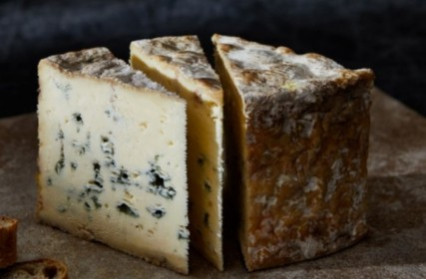
Blues require a little attention. A blue-veined paste like a Bleu d'Auvergne keeps a fine expression if it is neither suffocated nor exposed to excess air. You should avoid leaving it in direct contact with other cheeses without protection.
The most fitting rule remains this one: the more water the paste contains, the shorter the keeping. The denser, more pressed and more ripened it is, the more it withstands time.
Can you freeze cheese? · How to keep a ripened cheese
Serving cheese well: temperature, cutting and order on the board
Serving cheese counts as much as storing it. A cheese served too cold delivers only part of itself. The paste is firm, the aromas stay in the background, the taste seems shorter. For many cheeses, you should therefore take the piece out of the refrigerator between 30 minutes and 1 h 30 before tasting, depending on the size and the type of paste. The ideal tasting temperature is around 14 to 18 °C.
The exact time depends on the type, but the idea stays the same: let the cheese come back gently, without a temperature shock. A whole cheese needs more time than a small portion. A soft paste warms up quickly. A pressed paste takes longer to open up. The best way to serve is to observe rather than apply a mechanical rule.
The board also deserves attention. You should avoid mixing very different pastes without order. A blue, a very expressive raw-milk cheese, a soft bloomy-rind paste, a cooked pressed paste and a fresh cheese are not served in any way. The tasting order matters. You often begin with the mildest cheeses and move towards the most assertive.
The cut also has its importance. It must respect the structure of the piece so that each portion contains a little heart and a little rind depending on the type. Serving cheese is not only about placing it on a board. It is about making the experience the best possible!
On certain products, Maison Mons explicitly recommends serving at room temperature, notably for an Ossau-Iraty AOP , with a simple pairing. This indication confirms the importance of the serving moment, not only the storage.
How to cut a cheese correctly · How to slice a cheese correctly · How to compose a spring cheese board
Common mistakes to avoid
The first mistake is to wrap everything in tight plastic. This suffocates the paste, promotes bad moisture and can accelerate certain deteriorations. The second is to leave a cheese open too long without protection, in contact with the fridge air.
Another mistake: believing that freezing solves everything. You can sometimes freeze cheese, but it is not always desirable. Freezing often modifies the texture, especially for soft pastes, fresh cheeses and blue-veined pastes. After thawing, the paste more easily releases water, loses aroma and changes its hold. The freezer can suit certain cooking or recipe uses, for example a hard paste meant to be grated or cooked afterwards, but rarely for a board tasting.
You must also avoid taking the same cheese out and putting it back constantly. These temperature variations tire the paste. Finally, you should not wait for massive mould or an excessive smell before questioning the state of the product. Cheese gives more subtle signs before that: sticky rind, dried-out paste, bad smell, loss of taste.
Raw-milk cheeses: precautions for sensitive groups
Raw-milk cheeses present an aromatic richness and a complexity that make their interest. However, the absence of heating of the milk makes the presence of possible bacteria possible. While this remains without effect for a healthy adult, certain groups must take precautions. This information is given for guidance only: for any question relating to your health or that of those around you, we invite you to consult your health professional.
Health authorities recommend that young children under five, pregnant women and immunocompromised people avoid raw-milk cheeses. One notable exception concerns cooked pressed pastes like Comté, Beaufort, Gruyère or grand cru Emmental: the heating of the curd during production and the long ripening provide sufficient safety for these cheeses to be consumed by all, even when made from raw milk.
In all cases, it is advised to remove the rind for sensitive groups. Many cheeses also exist in a pasteurised-milk version: the labels "raw milk", "thermised milk" or "pasteurised milk" appear on the packaging.
About Mons Fromager Affineur
At Mons, cheese is worked over time. Ripening does not aim to freeze a piece, but to accompany it to a point of balance where texture, aroma, taste and hold answer one another with precision. The house highlights a careful selection, cellar work and an attentive reading of the cheese families, from the great production stages to the moment of serving.
Talking about cheese storage and serving therefore extends this same gaze. It is not only about keeping longer. It is about keeping better, then serving at the right moment.
Cheese storage: what to remember
Cheese storage is not limited to a duration or a single rule. It requires understanding the paste, the milk, the ripening, the moisture, the wrapping and the rhythm specific to each piece. A soft paste, a blue, a Comté, a Morbier, a fresh cheese or a goat cheese do not have the same keeping, nor the same serving moment.
Storing well means preserving the balance of the product. Serving well means giving it back its expression. Between the fridge and the board, between the paper and the cut, between the cold and the tasting, everything is decided in that discreet attention which respects the taste, the texture and the flavour of the cheese.