Which Cheese for Raclette: How to Choose, Portion and Serve It
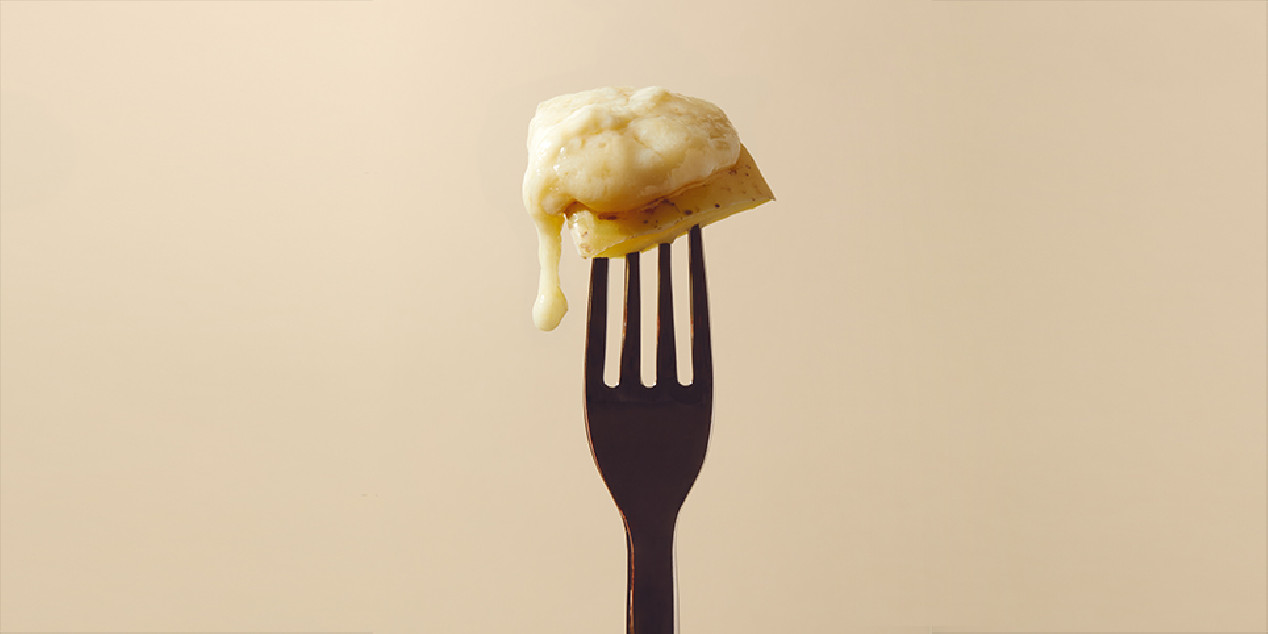
- A good raclette cheese is most often an uncooked pressed cheese; our Raw Milk Raclette, made at our own Laiterie de la Côte Roannaise, is aged for a minimum of 60 days in our cellars in Saint-Haon-le-Châtel.
- Raw milk and pasteurised milk mainly produce different aromatic profiles; how well a raclette melts depends on many other factors (production method, moisture, ageing) beyond the milk treatment alone.
- Plan for 200 to 250 g of raclette cheese per person for a classic meal, with variations from 100 g (light appetites, children) to 300 g (hearty appetites, no starter).
- Flavoured raclettes (smoked, peppered, wild garlic) should be judged first on the quality of the added ingredient, not the quantity used.
- Potatoes, cold cuts, gherkins and a dry mountain white wine make up the classic pairing; a few ideas let you move beyond plain raclette without losing what makes it work.
Choosing a cheese for raclette is not simply about finding one that melts. Most raclettes sold in supermarkets are designed to melt quickly and evenly, sometimes at the expense of flavour. A raclette cheese worth the name is chosen the way any other aged cheese would be: on texture, on how it was ripened, on what it delivers in the mouth once melted. This guide covers the criteria that separate a flat, forgettable raclette from a platter you genuinely enjoy serving: paste, milk, quantity per person, flavoured variants and pairings.
Recognising a Good Raclette Cheese
Traditional raclettes are generally uncooked pressed cheeses, like Morbier or Tomme, where ageing and rind work contribute significantly to the aromatic profile. This family nonetheless covers quite different production methods from one terroir to another.
Two things help tell a well-chosen cheese apart from an anonymous raclette.
The paste, first: it should be supple without being rubbery. A paste that is too young can stay chewy when melted and mask the cheese's flavour; a paste that is over-ripened becomes brittle and tends to release oil during cooking.
Provenance, second, matters as much as the recipe. A cheese from an artisan dairy, carefully worked and ripened, behaves differently from an industrial one. That is the work carried out at our own Laiterie de la Côte Roannaise, in Saint-Haon-le-Châtel, where our raw milk raclettes are made: plain Raw Milk Raclette, smoked raclette and raclette with wild Madagascar pepper.
Raw Milk or Pasteurised: What It Actually Changes
This is one of the questions that comes up most often when choosing a raclette cheese. The answer is less clear-cut than it is sometimes presented: how a raclette melts cannot be deduced from the milk's heat treatment alone. Production method, paste moisture, fat content and ageing all play a role too. Raclette de Savoie IGP, for instance, is a raw milk cheese, and its official specification describes it as spreading easily under heat and releasing little oil, proof that a raw milk cheese can melt just as cleanly as a pasteurised one (INAO).
What the milk treatment mainly changes is the aromatic profile. Pasteurised milk, heated before renneting, gives a more neutral paste that is more consistent from one piece to the next, which is why a large share of supermarket raclettes are made this way: it is a choice for consistency.
Raw milk, left unheated, keeps the flora specific to the terroir and the herd. The gain shows mainly on the palate: more length, and lactic and vegetal notes that pasteurisation tends to flatten. That is the profile we look for in our raclettes, made with raw milk at our Laiterie de la Côte Roannaise.
Ageing also plays a role, on texture as much as on flavour, even though the relationship between time in the cellar and melting behaviour follows no universal rule: it depends on each individual production. Our Raw Milk Raclette, for example, is aged for a minimum of 60 days in our cellars in Saint-Haon-le-Châtel before being offered for sale.
How Much Raclette Cheese to Plan Per Person
How much raclette cheese to plan per person depends mainly on your guests' appetite and what else is on the table.
The benchmark most often cited by cheesemongers is 200 to 250 g of raclette cheese per person for a classic meal, potatoes and cold cuts included. For five guests, that works out to roughly 1 to 1.25 kg of cheese; for ten, plan on 2 to 2.5 kg.
For young children or lighter appetites, 100 to 150 g is enough. Conversely, a meal where raclette is the only course, with no substantial starter beforehand, or guests with hearty appetites, can justify going up to 250-300 g per person. Serving a starter beforehand reduces the amount of cheese needed accordingly.
These benchmarks apply to a classic raclette cheese, thinly sliced. We sometimes notice, in the shop, that guests go back for seconds a little more slowly with a more strongly flavoured cheese, though this is not a general rule, nor something we would attribute to a single factor such as raw milk.
Flavoured Raclettes: The Cheese Before the Seasoning
Smoked, peppered, with wild garlic: flavoured raclettes have a poor reputation when the added flavour is used to mask an unremarkable paste. The question is not how much to add, but where what is added comes from.
For a smoked raclette, everything happens in the smokehouse. Traditional cold smoking over beechwood, carried out slowly, deposits a fine smoke that stays on the surface and the first few millimetres of the paste, without ever overwhelming it. The rind takes on a deeper colour, the scent of wood is noticeable before melting and fades afterwards, leaving room for the cheese. Smoking that is too fast or too heavy has the opposite effect: a smoky taste that dominates and masks everything else.
For a peppered raclette, the type of pepper changes everything. We work with black Voatsiperifery pepper from Madagascar, a wild pepper endemic to the island's humid eastern forests, still mostly harvested in the wild: the vines fruit high in the canopy, which makes picking difficult, and local harvesters gather the berries before passing them on to collectors. Its domestication is now the subject of research led by Cirad, alongside local replanting programmes. In the mouth, it is described as notably less sharp than most peppers, with woody, earthy and fruity notes of a subtlety few other peppers match. Paired with a ripened cheese, it rounds the cheese out rather than covering it, something a standard, more "blunt" pepper does not achieve in the same way.
For a wild garlic raclette, it is the freshness of the plant and the timing of the harvest that determine the result: wild garlic picked young, in spring, gives a green, slightly sharp note, very different from the dried garlic used year-round in some industrial productions.
In all three cases, the question to ask when buying a flavoured raclette is not "how much pepper or smoke is in the paste", but "what is the quality of what was added". That is the logic behind our Les Classiques platter and our Découverte platter, which bring these three variants together around plain raclette.
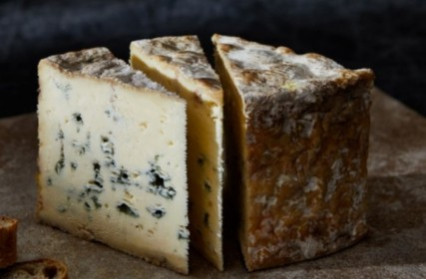
Nothing stops you from stepping outside raclette in the strict sense to vary the cheeses under the grill, pan by pan: Morbier, already mentioned above for its ash-layered paste; a blue-veined cheese such as Fourme de Montbrison AOP, creamier and more assertive than pressed cheeses, from the Monts du Forez; or a mixed-milk cheese such as Gabietou, made from cow's and ewe's milk and aged in the Béarn region. This is no longer, strictly speaking, raclette, but a way of widening the table to other regions and other cheeses, provided you keep the portions small so as not to overwhelm the more subtle flavours of the raclette itself.
Pairings and Serving: Putting Together a Good Raclette
The most common raclette pairing is simple: baby potatoes cooked in their skins, cured cold cuts (dry-cured ham, saucisson, dried beef), gherkins and pickled baby onions.
The driest cold cuts work particularly well with raclette: their firm texture and saltiness contrast with the melted cheese, something a softer, cooked cold cut delivers less distinctly. Thinly sliced dried beef or a well-aged mountain ham are safe choices.
When it comes to potatoes for raclette, the variety matters: a firm-fleshed potato, such as a baby potato or charlotte variety, holds up better during cooking and absorbs less water than a floury potato, which keeps it from falling apart under the melted cheese.
As for which wine to serve with raclette, a dry, lively mountain white (Savoie, Jura) is generally easier to pair than a tannic red, whose structure sits less comfortably with the richness of the melted cheese.
For a slightly less predictable raclette that still stays within the classic register, you can put together a platter that alternates plain raclette, smoked raclette and a neighbouring pressed cheese such as Morbier: the same family of texture, with an ash-layered paste that changes the rhythm of the meal without throwing it off balance. It is a simple way to get an original raclette without adding more seasonings. To go further, Fourme de Montbrison AOP and Gabietou, mentioned above, also have their place on this kind of platter, in small portions, for anyone who wants to move further away from pressed cheeses.
Frequently Asked Questions
How much raclette cheese per person for a child?
Plan for 100 to 150 g per child, as for a light appetite. This benchmark drops further for younger children, especially if the meal includes a starter or dessert.
Can you freeze raclette?
This is not recommended. As our cheese storage guide explains, freezing mainly suits cooked pressed cheeses (Comté, Beaufort, Emmental) intended for cooking. Raclette, an uncooked pressed cheese, does not fall into that category: freezing would change its texture and the way it melts.
Is raw milk raclette eaten cold?
Like any cheese, it tastes best taken out of the fridge thirty minutes to an hour and a half before serving, at room temperature rather than straight from the fridge. Outside of the hot dish, a slice of raclette also works very well as a table cheese, at that same temperature.
Mons, Cheesemonger and Affineur
Mons Fromager Affineur selects and ages its cheeses in its own cellars, working directly with a small number of producers followed over time; for raclette, that work takes place at our own Laiterie de la Côte Roannaise. It starts with the choice of milk and continues with regular observation in the cellar, until the moment judged right to offer it for sale. A dedicated page on cheese storage explains how to extend that same care once the cheese has reached your home.
Conclusion
Choosing a cheese for raclette calls for attention more than certainty: to the paste, to where the milk comes from, to what ageing has had time to build. A good raclette rests on that balance between substance and time, well before the question of flavouring or quantity served. Whether the cheese chosen is plain, smoked, peppered or flavoured with wild garlic, the principle stays the same: judge the quality of what makes up the cheese, not what is added to make it recognisable.