-
 Milk type
Cow
Milk type
Cow
-
 Cheese type
Cooked pressed cheese
Cheese type
Cooked pressed cheese
-
 Heat treatment
Raw milk
Heat treatment
Raw milk
-
 Country of origin
Switzerland
Country of origin
Switzerland
-
 Type of production
Artisanal
Type of production
Artisanal
TETE DE MOINE PDO
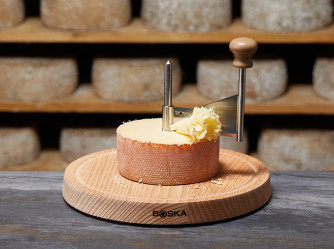
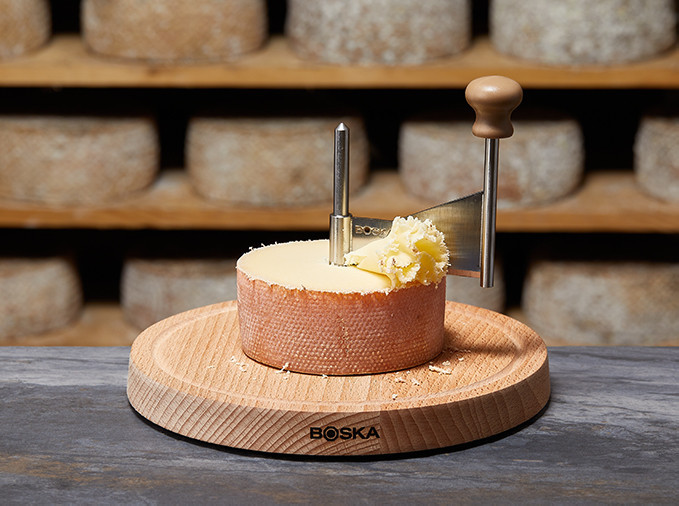
Tête de Moine PDO, the well-known Swiss cheese served shaved into delicate rosettes with a girolle, a cheeseboard and aperitif staple. Made in the Jura Bernois.
Approx weight: 800 g.
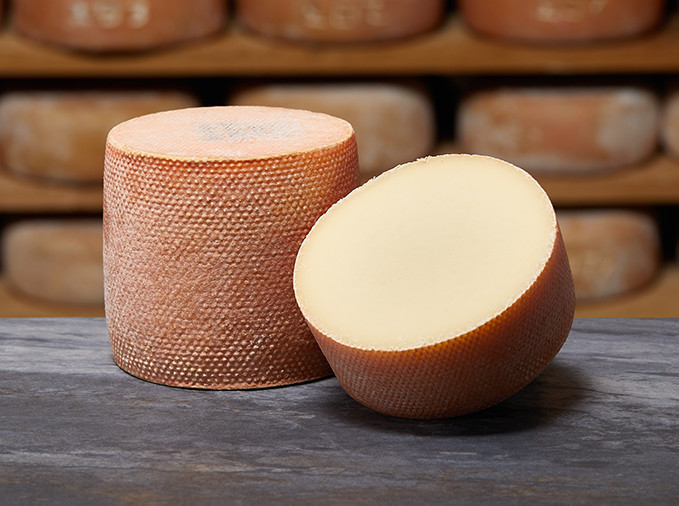
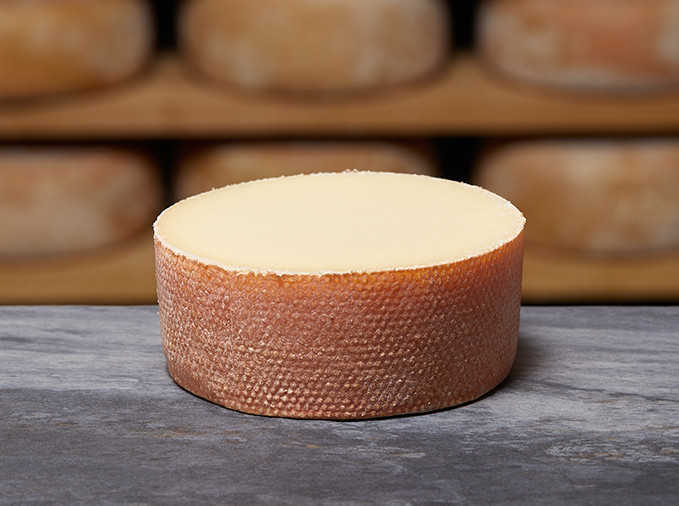
Under its fine, orange, woven-textured rind, the honey-yellow paste turns light and melting once shaved into rosettes. The nose recalls melted cheese, with a gamey edge; on the palate, it starts mild and builds in intensity.

Tête de Moine traces its origins back to the 12th century, first made by the monks of Bellelay Abbey in Switzerland. The origin of its name remains uncertain, a nod to the monks' tonsure, or to a tax once calculated "per monk's head"? But its fortunes changed for good in 1982 with the invention of the girolle, the tool used to shave it into light, airy rosettes now inseparable from cheeseboards and aperitifs everywhere.
Rennet is added to the milk once it has matured, giving a coagulation time of around 30 minutes. The set curd is cut with a curd knife, then heated to between 46 and 53°C while being stirred. The cheeses are then moulded, pressed and turned regularly, before a 12-hour brine salting.
Ageing begins in the production zone, on spruce boards, in a humid cave kept between 13 and 14°C, for at least 75 days.
The rosettes make a beautiful addition to a cheeseboard, and pair wonderfully with cherries, mango or pears. They're also lovely in a stuffing, folded into mash, or simply on a slice of country bread. Serve with a dry white wine (Savoie, Switzerland) or a wheat beer.
- Swiss cow's milk cheese (Jura Bernois), PDO
- Raw milk, pressed uncooked paste
- Best served shaved into rosettes with a girolle
- Total ageing of up to 180 days
- Fine orange, woven-textured rind, honey-yellow paste
Order online, dispatch within 36 to 48 hours in Chronofresh refrigerated transport, free delivery in mainland France on orders over 70 €.
To serve Tête de Moine in rosettes and build a Swiss board, also discover the Tête de Moine curler, Swiss Gruyère AOP, L'Etivaz AOP and Appenzeller Extra, along with our Swiss cheeses and our AOP cheeses.
You might also like